


- WindRelay campaign used vishing plus custom malware to turn phones into POS skimmers
- Victims installed personalized RATs and NFC malware, enabling real‑time card theft
- Attacks were highly targeted across Eastern Europe, with only a few individuals hit
Hackers are turning people’s smartphones into malicious Point of Sale (POS) devices and stealing their money directly from their payment cards, experts have warned.
Security researchers Group-IB spotted multiple such attacks across Eastern Europe, and named the campaign WindRelay, after the custom-built malware used during the attacks.
The report notes this is a highly sophisticated, custom-tailored attack designed specifically for the victim. It starts with some form of reconnaissance, in which the attackers learn their victim’s identity, phone number, and likely other details. Although the researchers don’t discuss it, it is quite possible that the attackers obtained (or purchased) the data from unrelated data breaches and leaks.
Vishing and malware
After learning a little bit about their target, the attackers get to work. They first prepare a remote access trojan (RAT) named SpyNote. They personalize the label with the victim’s own name (instead of it being a generic or impersonated brand), to build trust with their victim:
“Such tactics are more effective at weakening a victim’s natural defenses and suspicions,” the researchers noted in the report. “It removes the one cue people are trained to check before installing something unfamiliar — a strange or generic app name — right at the moment they’re most likely to hesitate.”
Then, they call the victim on the phone and introduce themselves as employees of their target’s bank. They claim the victim has a problem with their bank card, and instruct them to deploy SpyNote through the device’s package installer (the standard way to sideload apps outside an official app store).
SpyNote is a classic RAT that the attackers then use to deploy stage-two malware themselves. In this next step, they personally (as opposed to having the victim do it) install WindRelay, custom near-field communication (NFC) malware designed to capture contactless payment card data in real-time, when a card is tapped against the phone.
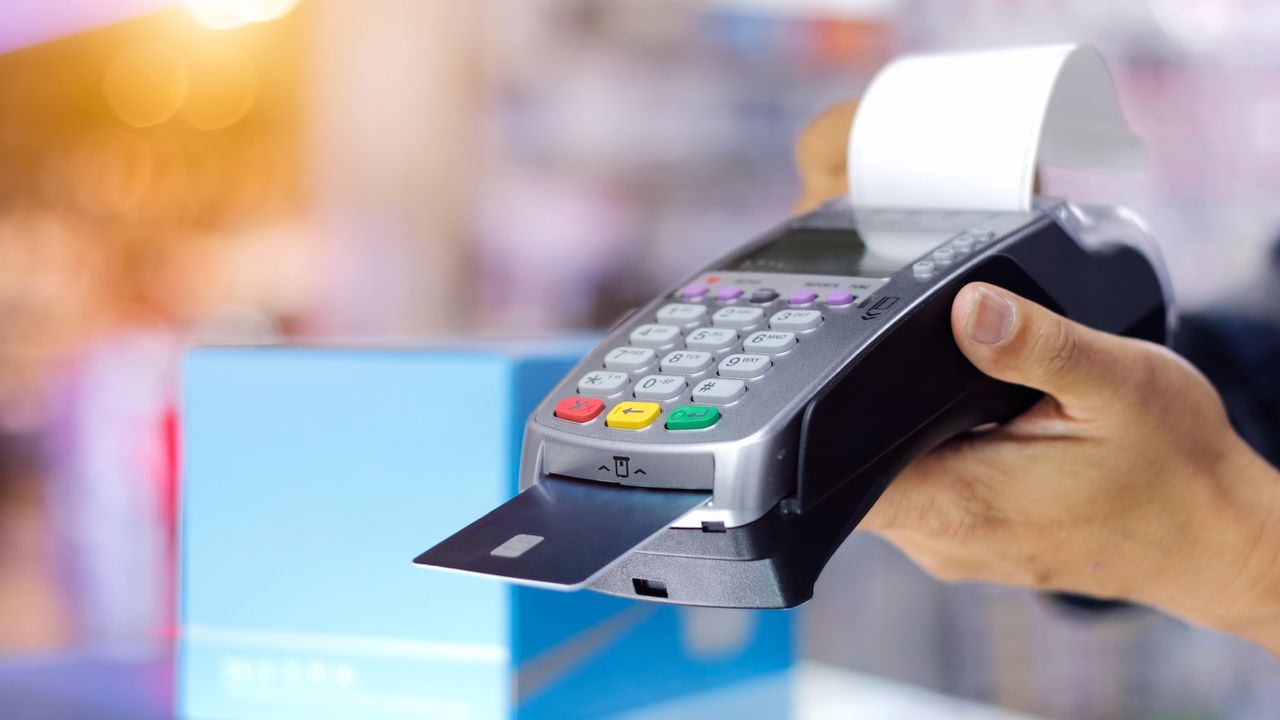
In other words, the malware turns the smartphone into a POS, and when a victim taps their card against it, the information is relayed to an attacker’s terminal.
Vishing + malware
Vishing + malware combo is nothing new. We’ve seen it deployed numerous times before, and ShinyHunters are probably the shiniest example of the practice (pun definitely intended). Over the last couple of years, ShinyHunters have been calling their victims on the phone, impersonating the IT department, and getting their victims to log in via fake login portals which relay the credentials to the attackers.
They then use the credentials to access their victims’ SaaS products, exfiltrate as much sensitive data as possible, and then demand ransom in exchange for deleting the stolen files.
This new campaign, however, is a testament to the technique’s evolution. While ShinyHunters’ operatives only stay on the phone call until the victim logs in, these crooks remain on the line for as long as it takes. Group-IB says the average call lasts around 13 minutes, and by that moment, the victim will have installed both SpyNote and WindRelay, and has tapped their bank card against the phone, making unwanted payments.
In at least one case, the attackers successfully applied for a loan at the victim’s bank, stealing not only the money they had on their account, but also money they would have earned in the future.
The identity of the attackers is unknown at the time. We also don’t know exactly how many victims there were, but given the highly personalized nature of the attack, it’s safe to assume that there were only a handful.
Group-IB says it observed attacks in Czechia, Slovakia, and Slovenia, suggesting a threat actor focused primarily on Eastern European victims. The researchers also said they identified 23 samples uploaded to VirusTotal between November 2025 and July 2026, meaning the campaign was active for approximately seven months, targeting 23 individuals.
“The samples mimic various institutions from the targeted countries and contain text in the language of each targeted country,” the researchers said. “Some samples contain personalized UI elements and labels, such as the name of the victim, similar to the personalized RAT. This suggests the threat actor behind these campaigns most likely has the capability to dynamically build malicious applications tailored to individual victims.”
Group-IB says users should treat personalized app labels as a red flag and should apply extra friction to loan applications.

