


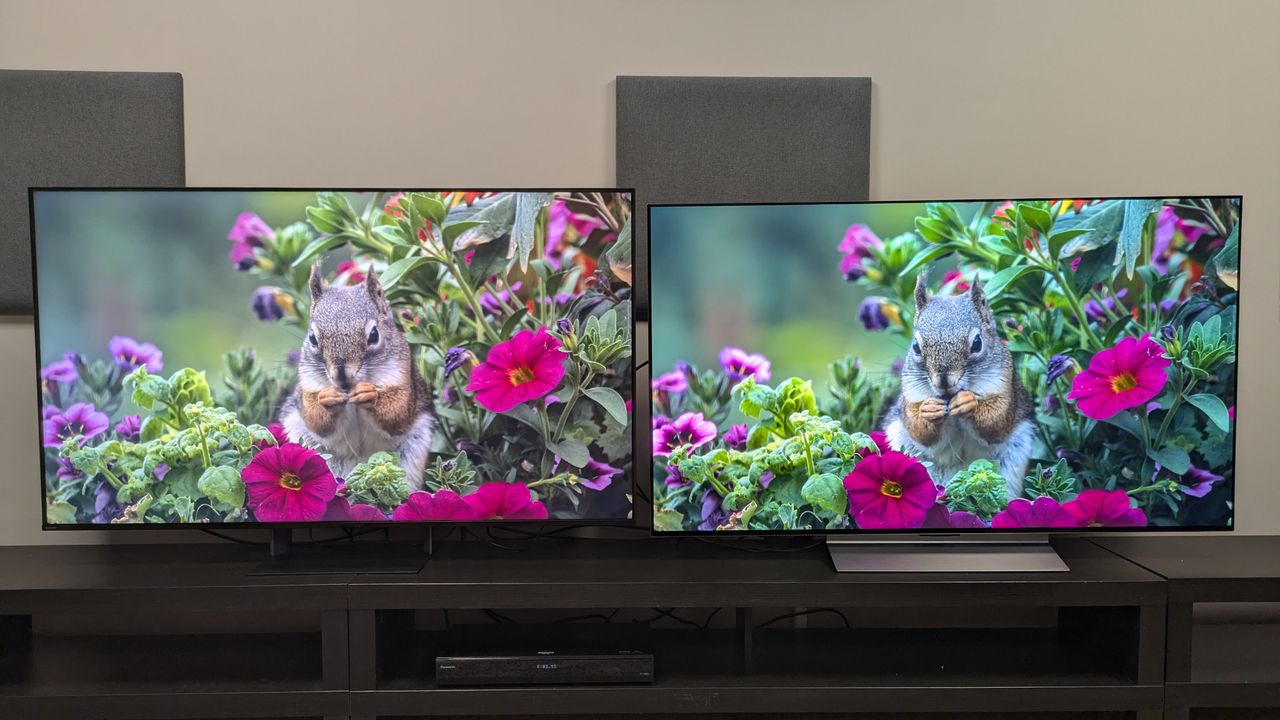
In 2025, Hisense introduced RGB mini-LED to the market and since then, most TV brands have thrown their hat into the RGB TV ring. TCL, Samsung, LG and Sony are major names who have adopted the new technology, which was dubbed as being a potential ‘OLED killer’, thanks to boasting higher brightness and bolder colors, and claiming to deliver black tones to rival the best OLED TVs.
One of those new TVs has just entered our lab: the Sony Bravia 7 II. The more affordable model of Sony’s RGB TVs, sitting below the flagship Sony Bravia 9 II, the Bravia 7 II is priced fairly similarly to rival mid-range OLEDs. So, I decided to see how the Bravia 7 II would fare against the five-star LG C6, one of the best TVs I’ve tested in 2026 so far.
For these tests, both TVs were set to their respective, out-of-the-box Filmmaker Modes. For the Bravia 7 II, this was called Professional in SDR/HDR, and Dolby Vision Dark when displaying Dolby Vision content. On the LG C6, it’s just the Filmmaker Mode.
Colors
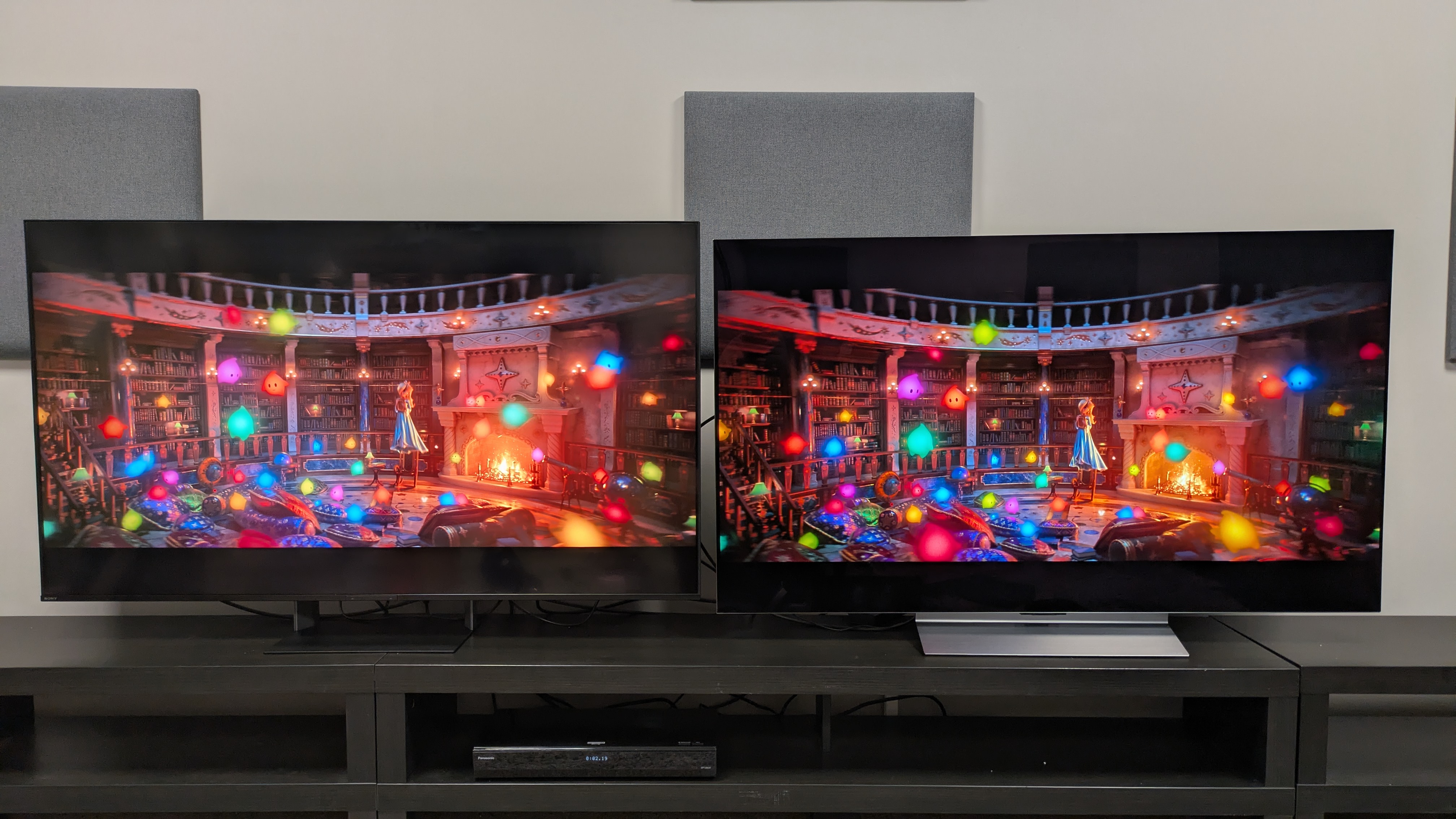
Starting with The Super Mario Galaxy Movie, both the Bravia 7 II and C6 demonstrated excellent color reproduction. In the opening scenes, the Lumas’ colors are richer and deeper on the C6, whereas they were brighter on the Bravia 7 II, which worked well for highlights on screen such as when Rosalina uses her wand.
While most colors were a bit punchier on the C6, I did find that yellows and golds actually appeared more vibrant and eye-catching on the Bravia 7 II, shown by the light from the fire reflecting in Rosalina’s hair and face.
Later scenes showed that the C6 had much bolder reds, shown in Mario’s hat and overalls. The C6’s colors also looked more accurate for the most part to me, though during an early scene where Mario and Luigi ride through the desert, I was drawn to the Bravia 7 II’s warmer color tone, with the desert sand looking more true-to-life on the Bravia 7 II, whereas it looked too red on the C6.
There was no denying though the C6’s color handling allowed for more texture and saturation within them, which worked well for this animation.
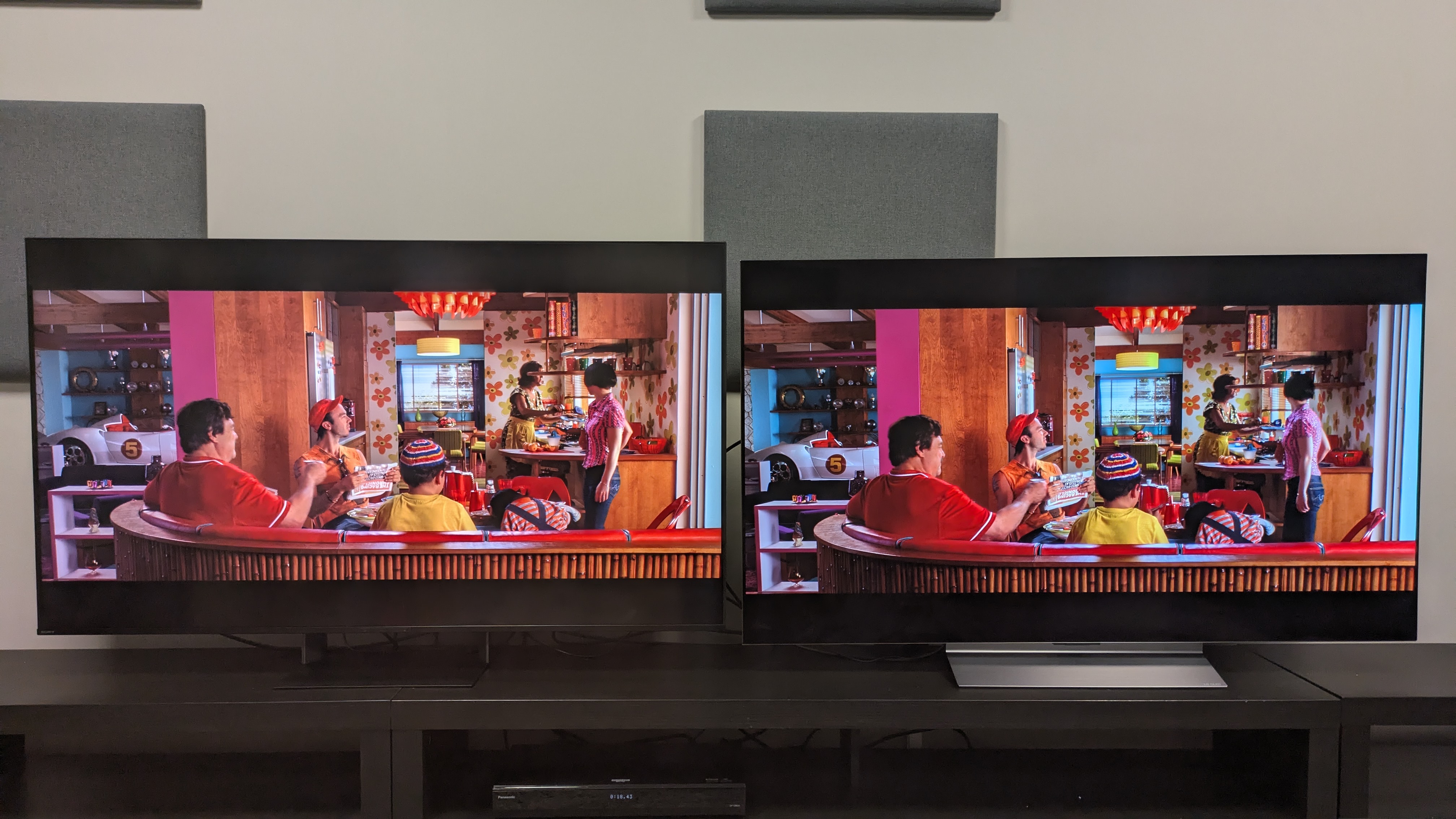
Moving to a movie with some real-life elements, Speed Racer, both TVs did a great job reproducing the movie’s over-saturated, cartoonish color profile. The ’60s-inspired, often-garish color of people’s outfits and the decor of the Racer family home really popped on both screens. S
imilar to Mario Galaxy, the C6 demonstrated deeper, bolder colors, while the Bravia 7 II showed brighter colors. In the scene in the park where Speed first meets Trixie when they’re both children, the red of Trixie’s dress is punchier on the C6, but the green grass is more vivid on the Bravia 7 II.
In some instances, the Bravia 7 II’s colors did look a little washed out, bordering on too-pale, which was exaggerated by comparing it directly to the C6’s color depth. Reds appeared slightly orange on the Bravia 7 II compared to the C6, a similar story to what happened when I compared the Samsung S95/S99H with the G6, with the former showing orange-tinted reds.
Still, color reproduction is one of the selling points for RGB TVs, and while I felt that the Hisense UR8 (that company’s own more affordable RGB mini-LED TV) didn’t stack up that well for color against the Samsung QN80H standard mini-LED when I tested the UR8 and QN80H side-by-side, the Bravia 7 II is putting up a solid fight against the LG C6 OLED (which is a superior TV to the QN80H).
Contrast/dark room viewing
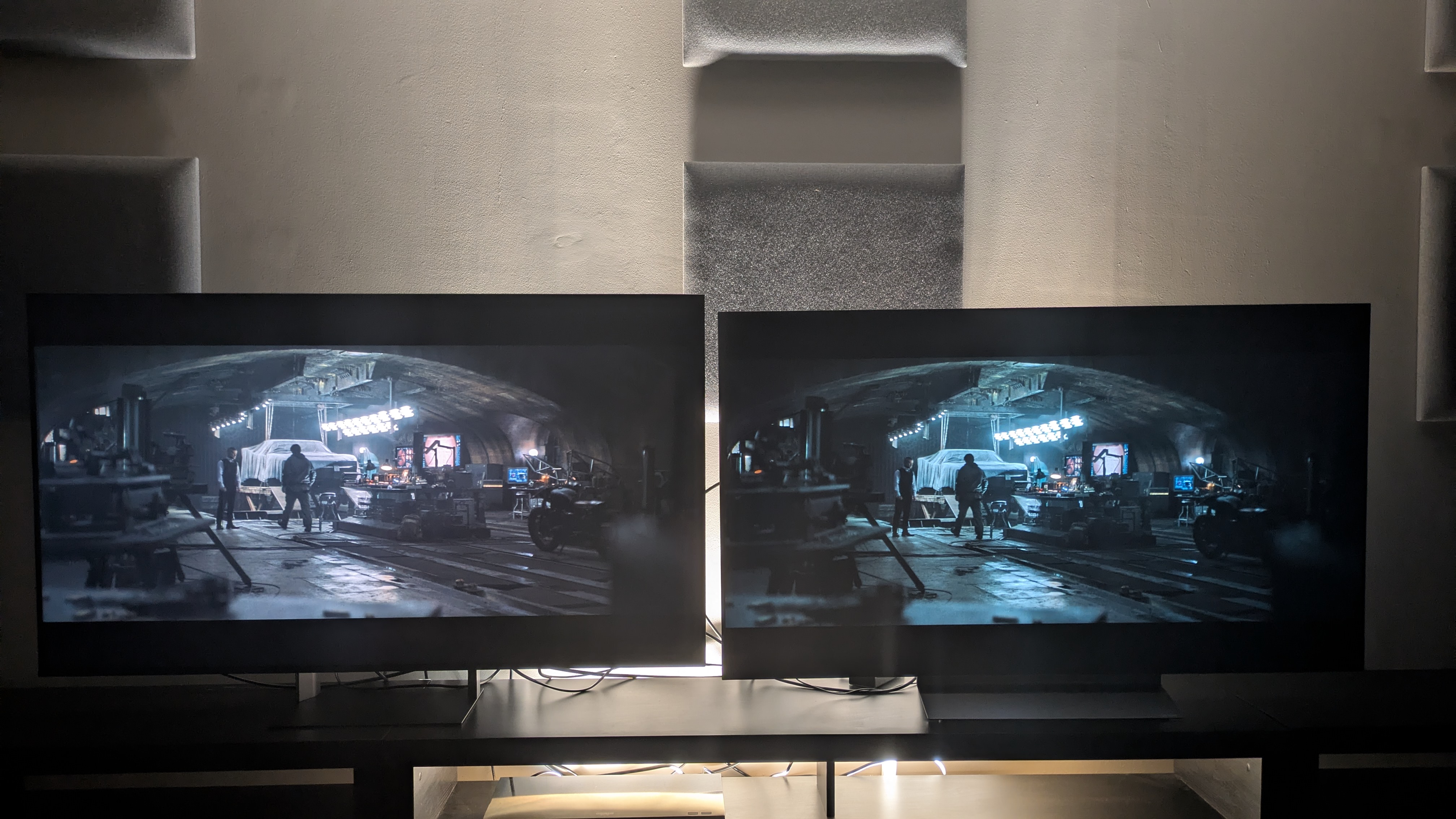
The Batman is something of a torture test for TVs due to its low brightness, which means dark tones can look inaccurate. While OLEDs do a better job displaying it generally, recent models such as the LG G6 have over-brightened the dark tones at times — but the C6 has always handled it well, so it’s a great test against the Bravia 7 II.
Watching scenes from the Batcave early in the movie, both TVs demonstrated strong contrast with a great balance between light and dark tones. The C6 had a higher perceived contrast as its black tones were much deeper, thanks to OLED’s pixel-dimming abilities, which meant the dark surroundings that contrasted with the overhead lights and lights from Bruce’s equipment create a higher dynamic range.
Still, the Bravia 7 II demonstrated strong backlight control, better than almost any standard mini-LED TVs I’ve tested this movie on. I also praised the Hisense UR8 for this, so it certainly looks like RGB TVs have unlocked better contrast and dark area control for LED TVs.
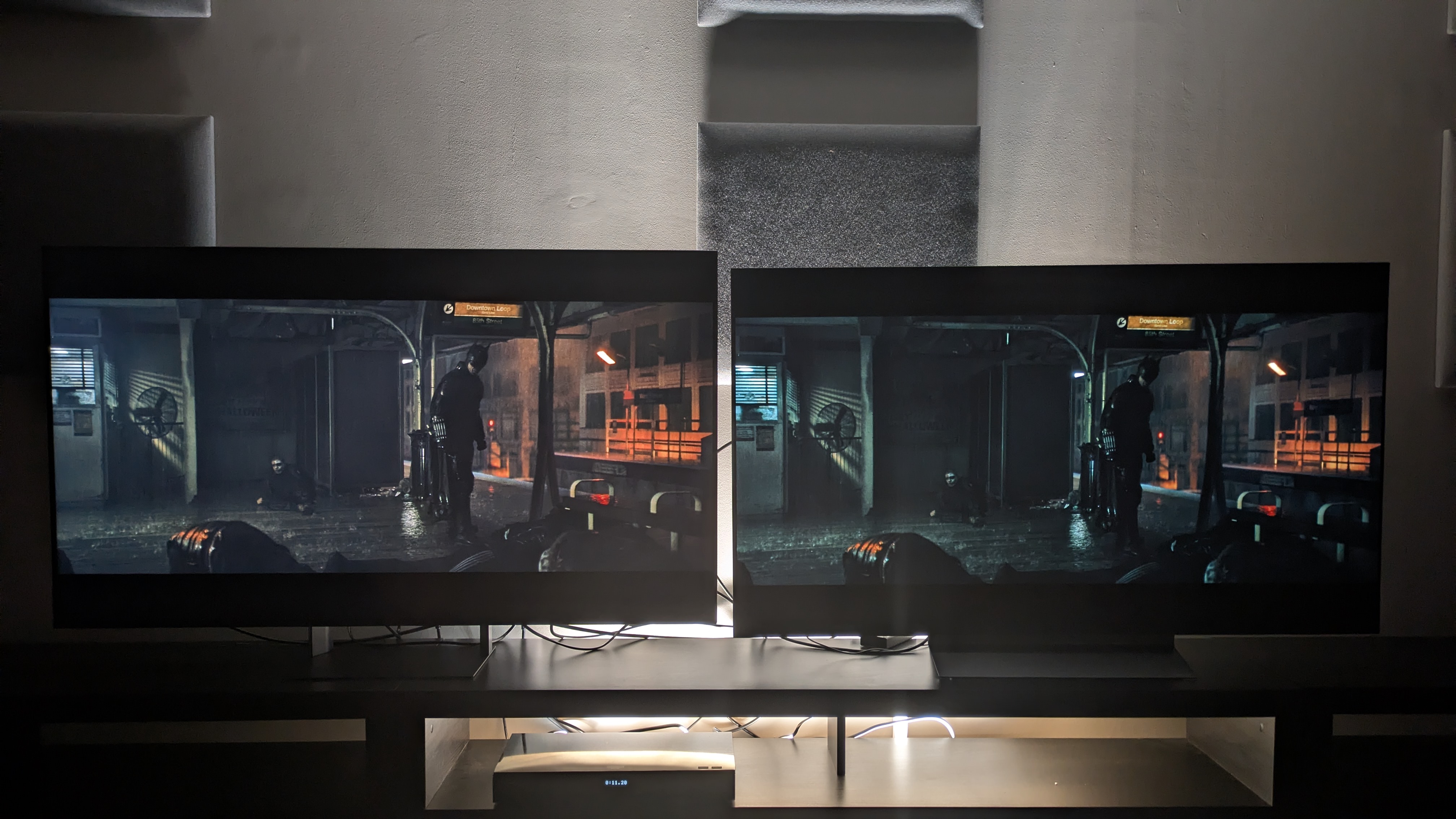
In the subway fight scene, the C6 once again proved to have the better black tones, accurately capturing the gloomy tone of the film. However, on the Bravia 7 II, more details such as Batman’s armor and the texture of the back wall were legible, thanks to showing them in slightly higher brightness (more on that in a while), compared to the C6.
The C6 itself showed the occasional sign of black crush compared to the Bravia 7 II. For out and out contrast though, I preferred the C6’s look, but the Bravia II was impressive.
Watching in a dark room, the C6 has the benefit of no backlight, meaning there was no ‘cloud’ effect, where a backlight is obvious over a dark scene. While the Bravia 7 II did show the odd moment of clouding, again it showed excellent backlight control compared to the competition.
There was also very little blooming in the scenes I tried; it only became obvious when a bright menu appeared on the bottom of the screen. Even the Bravia 7 II’s viewing angles were solid, not showing anywhere near the level of blooming a standard mini-LED TV would when watched way off-angle.
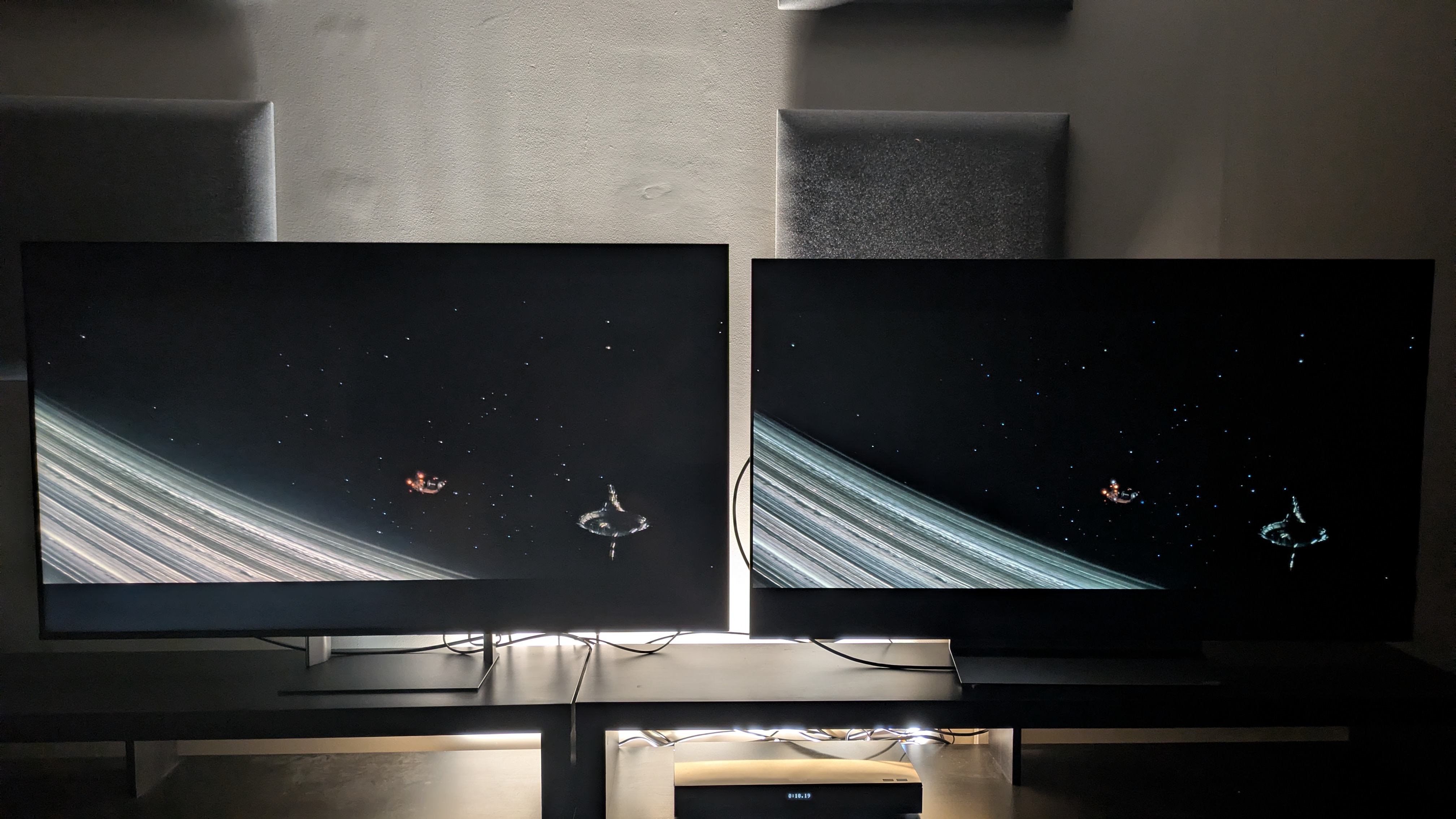
I decided to try one final black level test, using the scenes of space from Alien: Romulus. As expected, the C6’s black levels were inky and deep, delivering strong contrast against the stars.
Again though, the Bravia 7 II’s black levels were very good for a backlit TV, although there was some graying on occasion.
I did notice more blooming on the Bravia 7 II in this film however, most prominently whenever bright, white text appeared against black backgrounds. Still, the Bravia 7 II fared better with this movie than I thought.
Brightness
I’m about to get into brightness measurements, but there’s a caveat. For my testing, I profile a Klein K-10A colorimeter and Jeti Spectral 15VA spectroradiometer for the best accuracy — and for some reason, I could not get the two’s Delta-E results to line up completely when preparing to measure the Bravia 7 II.
The same equipment worked fine with other TVs when I checked it, so it suggests there’s something odd with the 55-inch Bravia 7 II unit I tested, or perhaps with the way the equipment interacts with it.
Before my full review, we’re getting a different, 65-inch unit in, and I will measure it again — however, I’ll provide the measurements I took so far for reference, because while the Delta-E wasn’t perfect, it wasn’t too far off, so they should be instructive. (And the LG C6 measurements have no issues.)
Brightness results for these two TVs are actually quite surprising. In Filmmaker Mode, the C6 registered 1,427 nits of peak HDR brightness in a 10% window, while the Bravia 7 II registered 1,218 nits peak HDR brightness in its equivalent Professional mode. I was surprised to see that the C6’s peak brightness was higher, as I thought an RGB mini-LED would hit much higher numbers than an OLED.
Looking at fullscreen HDR brightness (a 100% window), this is where the real difference lies. The C6 hit 247 nits in Filmmaker Mode, while the Bravia II registered 957 nits in Professional mode. This is a huge difference — this is the area where mini-LED in general trump OLEDs, though 957 nits is especially high, even
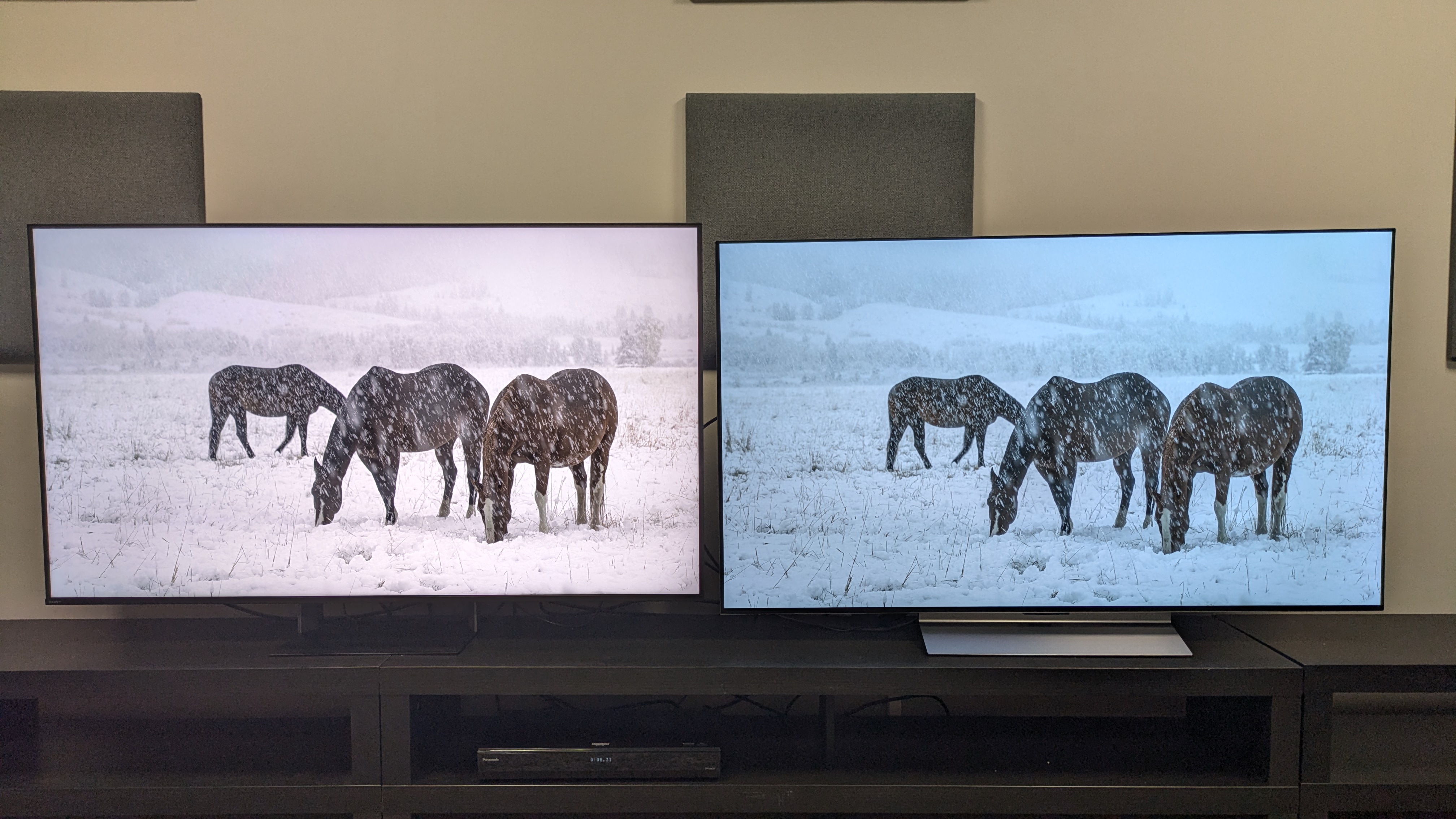
Seeing how this translates into real-world viewing, it shows mostly in bright scenes or scenes with a lot of white. Watching snow scenes from the Spears & Munsil demo footage, a shot of some horses in heavy snowfall is significantly brighter on the Bravia 7 II compared to the C6, giving it a more realistic look.
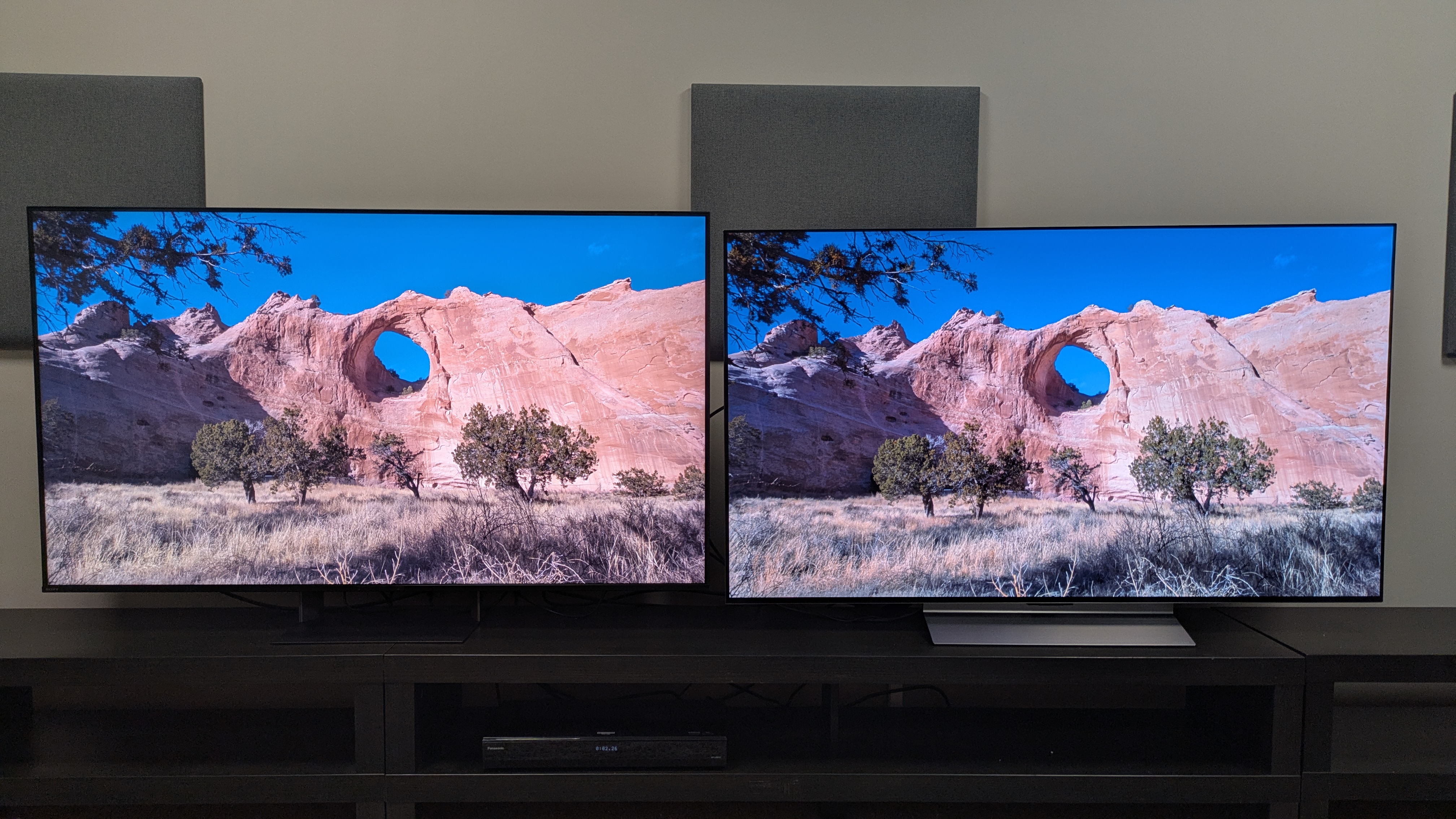
Another shot of a cliffside during the daytime again looks much brighter on the Bravia 7 II compared to the C6. As the cliff takes up a large portion of the image, the Bravia 7 II, which is brighter in measured areas like 50%, 75% and 100% compared to the C6, means the image looks brighter overall on the Bravia 7 II.
In scenes from Speed Racer, the C6’s peak brightness means white highlights look glossier, such as on the shell of the Mach 5, and colors have more punch in highlight areas, such as the red M on Speed’s helmet. But as the Bravia 7 II has higher fullscreen brightness, the picture does look brighter overall on the Bravia 7 II.
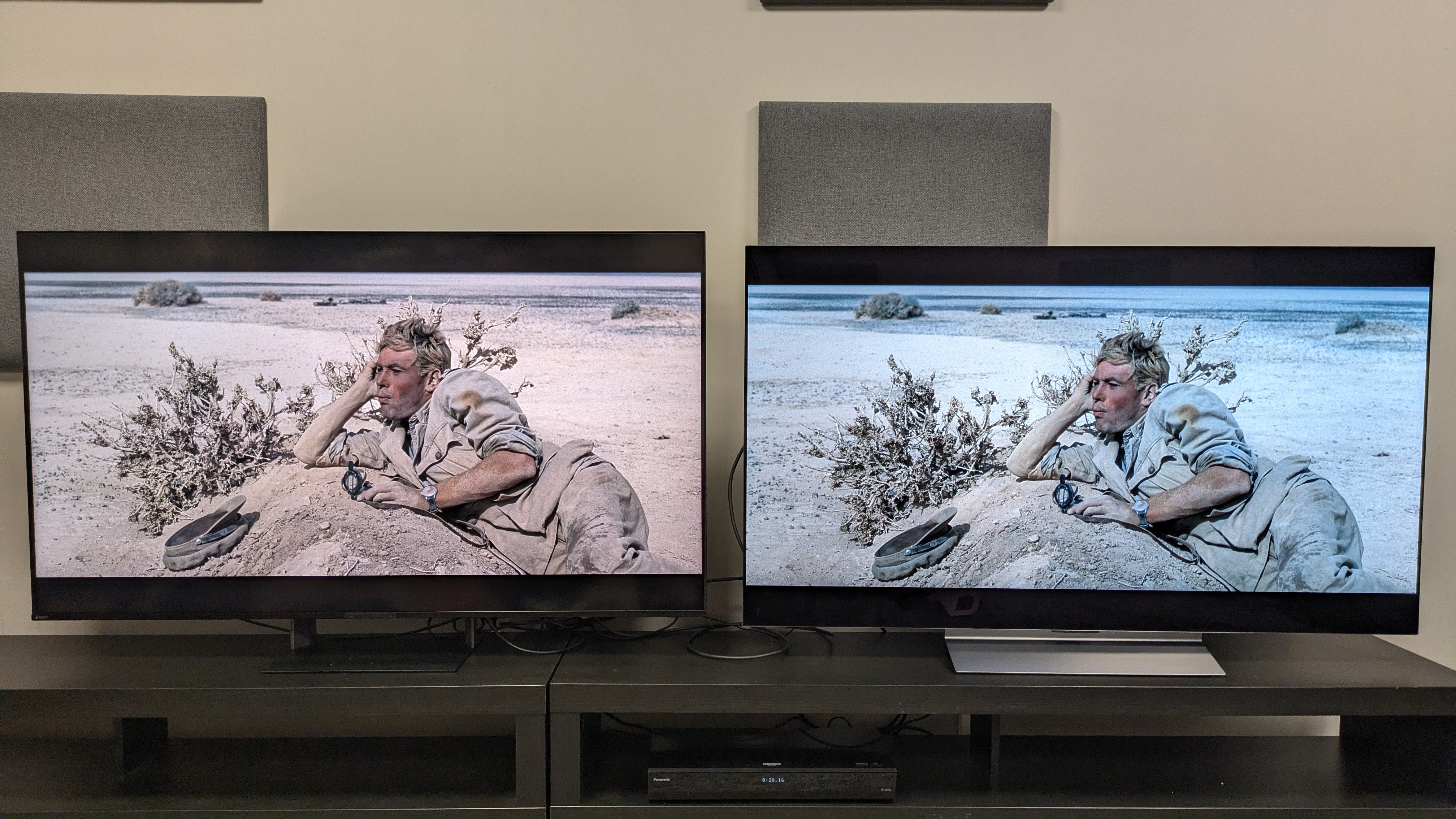
Finally, using a scene in the white-sanded desert from Lawrence of Arabia, this is one movie where the C6 and Bravia 7 II are much closer in brightness in real-world movies. As Lawrence rests on a rock, the sands behind him look punchier on the C6. His metallic watch had slightly more pop too, although this was minimal.
When the sands take up more of the screen, as a stranger approaches Lawrence and his guide, the C6 once again had higher perceived brightness for me.
In this instance, it seems to be related to both TVs color profiles. The Bravia 7 II’s warmer color tone, giving it the brown/orange tint you expect from this type of picture mode, blends more with the desert, whereas the C6’s red tone gives the desert a little more pop.
In terms of bright-room viewing, where you’re contending with reflections, the Bravia 7 II is better overall, although the C6 does handle brighter scenes well, such as the ones from Lawrence of Arabia.
With darker movies, the Bravia 7 II is the better option, but it is still prone to mirror-like reflections (the Bravia 7 II doesn’t have the same anti-glare screen as the step-up Bravia 9 II). However, they weren’t as noticeable as the mirror-like reflections from the C6’s even glossier screen.
A step forward, but not quite there yet
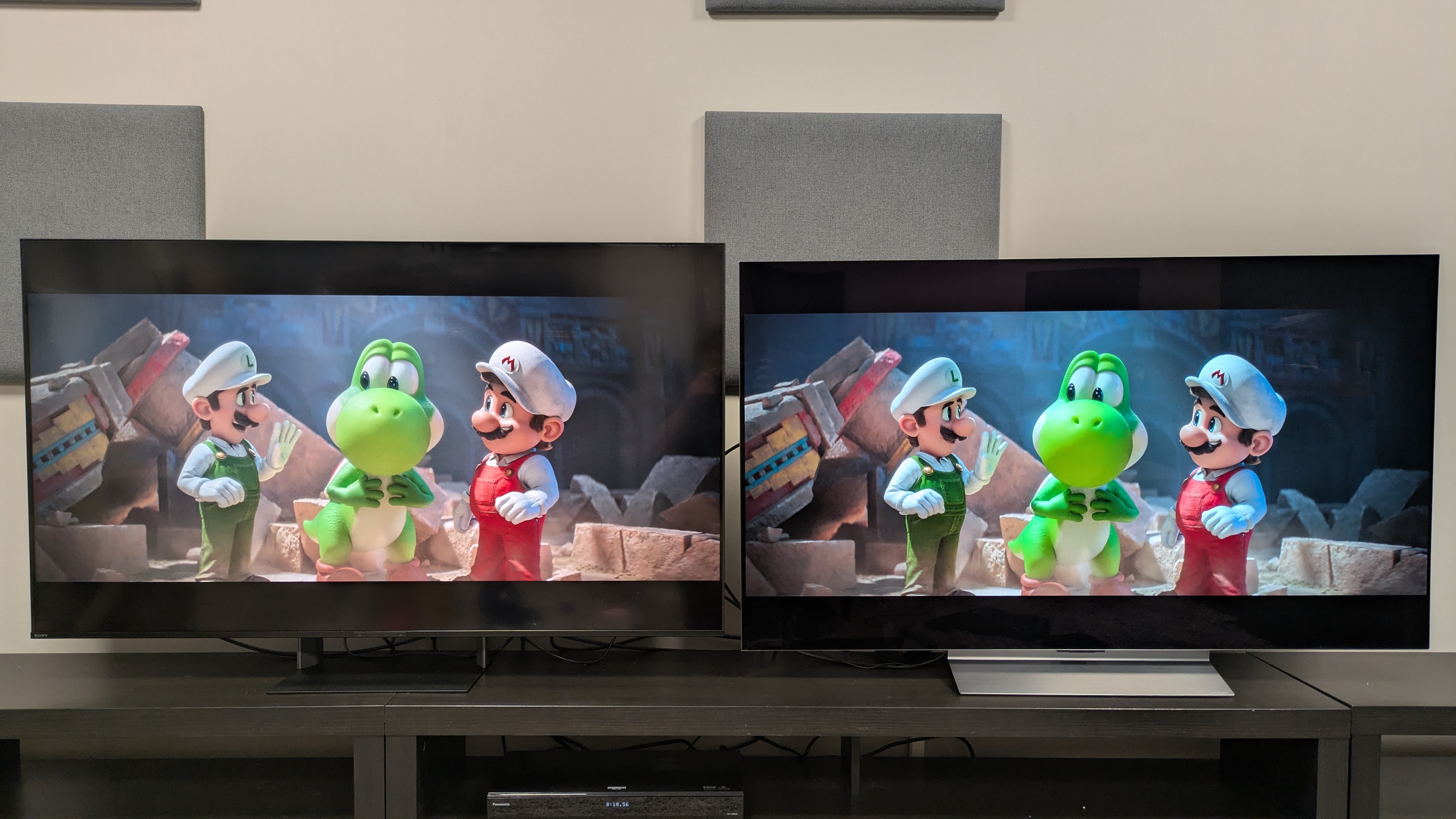
Whenever I’ve compared standard mini-LED and OLED, OLED has often come out on top, thanks to its richer black tones and contrast, more refined image and deeper, bolder colors. RGB has been touted as the latest big rival to OLED, and the Bravia 7 II gives the C6 OLED a really good fight.
When smaller RGB TVs first joined the market this year, with the tech itself only arriving in 2025, I thought prices would be inflated. While the C6 is the better priced TV right now, with a 55-inch model costing $1,499 / £1,499 / AU$2,995, a Bravia 7 II isn’t priced too differently, with a 55-inch model costing $1,799 / £1,799 / AU$2,995. (Though LG TVs tend to get more aggressive discounts than Sony TVs, so LG might retain the edge over time.)
For now, the C6 is still the TV I recommend between these two, because it offers the crisper look, bolder colors and more dynamic contrast I’m looking for, as well as a cheaper price. But, there’s a lot to like about the Bravia 7 II and if this is a sign of what’s in store for RGB TVs as the tech develops, OLED will need to watch its back.
Thinking of buying a new TV?
Try our TV size and model finder! You tell it how far you sit from your TV, we’ll tell you what size to buy based on viewing angle advice from image quality experts, and we’ll recommend our three top TVs at that size for different prices.

